
Stretch marks can appear suddenly on your skin, leaving marks that worry you. These lines, which look like small scars, actually form when your skin’s elastic fibers tear under too much tension. In this article, we’ll explore the different causes of stretch marks, from hormonal changes to rapid growth, and understand why some people are more susceptible to them than others.
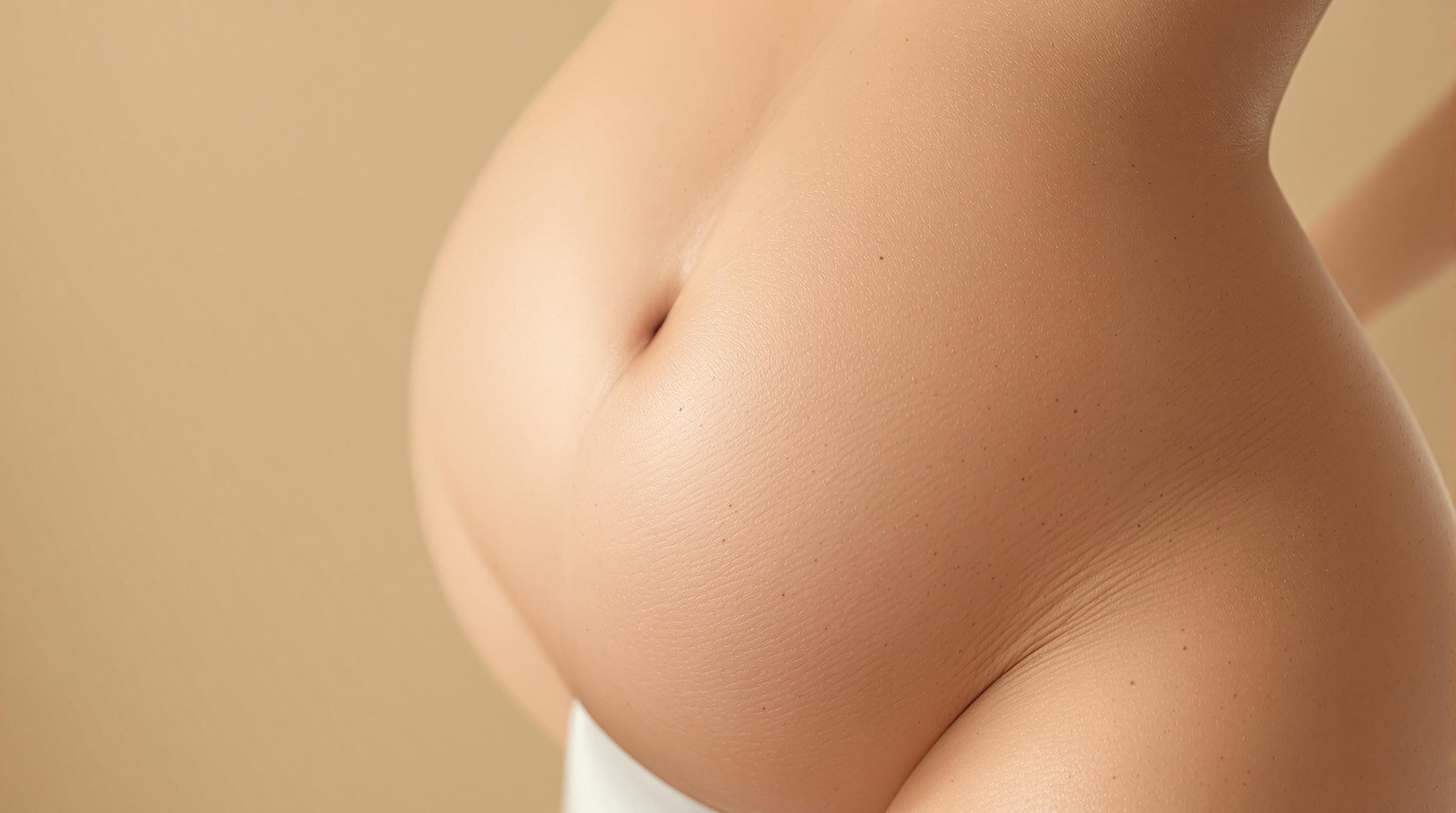
Introduction to stretch marks
Stretch marks are marks that appear when our skin is stretched too quickly. At this point, the collagen and elastin fibers that give our skin its suppleness tear under the strain. These marks can affect everyone, men and women alike, at different stages of life.
What causes stretch marks to appear?
Stretch marks don’t appear by chance. In fact, several factors can trigger their appearance. Here are the main causes to be aware of:
- Hormonal changes play a major role. Puberty, pregnancy and even certain medications can alter our hormones and make our skin more fragile.
- Our genetic heritage counts too. If your parents have stretch marks, you’re more likely to have them too. You can’t choose your genes!
- Rapid weight changes are often the culprit. Whether it’s a significant gain or loss, our skin has difficulty keeping up with these sudden changes.
- Intensive sport can also be to blame, particularly during phases of rapid muscle building. Athletes looking to build muscle fast are well aware of this problem.
- Stress doesn’t help. It increases our body’s production of cortisol, a hormone that can affect our skin’s elasticity.
- Certain medications, particularly cortisone creams used over long periods, can also promote their appearance.
The good news? Now that you know these factors, you can be more attentive to situations that are likely to cause stretch marks. Even if you can’t always avoid them, understanding their origins can help you anticipate them more effectively.
But what to do when these marks appear for no obvious reason, such as weight gain or pregnancy? This raises an intriguing question: why do some people develop stretch marks when their weight remains stable?
Hormonal factors
Hormones play a decisive role in the appearance of stretch marks.
Pregnancy is a time of particularly intense hormonal upheaval. Estrogen and other hormones specific to this period bring about major changes in the skin. As a result, 7 to 8 out of 10 pregnant women develop stretch marks.
Teenagers are also very much affected by this hormonal phenomenon. During puberty, hormonal changes affect virtually all young people: around 95% of girls and half of boys develop stretch marks. Certain diseases that disrupt hormonal balance, such as Cushing’s syndrome, can also cause stretch marks.
Genetic factors
Your genetic predisposition plays an important role in the appearance of stretch marks. If your parents or other family members have them, you’re more likely to develop them too. This tendency is explained in particular by the type of skin you have inherited.
Very thin skin, which naturally contains less collagen and elastin, is more fragile to stretch marks. These elastic fibers are essential for maintaining your skin’s suppleness. When there are fewer of them, the skin is less resistant to stretching.
Skin color also influences the visibility of stretch marks. Light-skinned people, particularly white and redheads, are no more affected than others. However, stretch marks are more visible on their skin, which may give the impression that they are more sensitive to them.
Environmental and mechanical factors
Stretch marks often appear following rapid physical changes. Intensive weight training, for example, can cause them to appear when muscles grow too fast. This is particularly true for bodybuilders or people starting an intensive training program.
Skin is also sensitive to its environment. Smoking and pollution weaken elastin fibers, making it more vulnerable to stretch marks. Similarly, dehydrated skin loses its suppleness and is less resistant to stretching.
The sun’s UV rays can also play a role. It damages collagen and elastin, two essential components of the skin’s resistance. That’s why it’s a good idea to protect your skin from the sun, especially if you’re involved in outdoor sports or if you’re rapidly building muscle.
Why do I have stretch marks when I’m not putting on weight?
Contrary to what you might think, stretch marks are not solely linked to weight gain. In fact, they can appear in a number of situations, even if your body mass remains stable.
Rapid growth is a good example. In adolescence, the body sometimes grows so fast that the skin can’t keep up. The result? Stretch marks can appear on thighs, backs or even arms.
Intensive weight training may also be responsible. When you gain muscle quickly, your skin undergoes the same type of stretching as with an increase in body mass. This is particularly true for areas like the shoulders or pectorals.
And don’t forget that some people are naturally more prone to stretch marks. It’s a question of genetics: if your skin is thin or less elastic, it’s more likely to mark.
So why are young girls particularly affected by this phenomenon? To better understand, we need to look at the specifics of this period in their lives.
What causes stretch marks in young girls?
Puberty is the period when stretch marks most often appear on young girls. And that’s no coincidence! This period of intense body transformation creates the perfect conditions for their formation.
Two main factors explain their appearance:
- Rapid body growth: Between the ages of 12 and 14 on average, the body sometimes grows so fast that the skin can’t keep up. The result? It stretches beyond its capacity, particularly around the breasts, hips and thighs.
- Hormonal changes: during puberty, hormones go on a rollercoaster! This hormonal turmoil reduces production of collagen, a protein that gives skin its elasticity. As a result, it becomes more sensitive to stretching.
Other factors can aggravate the situation. Less efficient blood circulation during adolescence makes the skin less supple. Intensive sports or rapid weight changes can also create a favorable environment.
Don’t panic: stretch marks that appear during puberty are often less pronounced than those that form at other times of life. Over time, they tend to fade naturally.
But can we speed up the process, or even prevent them from appearing in the first place? Understanding the possible solutions, from treatments to simple everyday gestures, can make all the difference.
Treatment and prevention
Stretch marks can be treated, and in some cases even prevented. But you need to act at the right time, with the right solutions.
Let’s start with treatments. Red stretch marks, which have just appeared, respond best to treatment. This is the ideal time to use specific creams, especially those containing vitamin A acid. These creams should be applied every other day, for a maximum of a few weeks.
For older stretch marks that have turned white, the solutions are different. Lasers can give good results, particularly fractional lasers. But beware: this type of treatment requires several sessions and represents a significant financial investment.
When it comes to prevention, a few simple gestures can make all the difference. Moisturizing the skin is essential. Apply a moisturizing cream or natural oil to at-risk areas morning and night. Argan, shea or sweet almond oil are excellent options.
Your lifestyle also plays an important role. Drink enough water and eat a balanced diet. These habits help your skin maintain its natural elasticity. If you need to lose weight, do it gradually. Sudden weight changes are often responsible for the appearance of new stretch marks.
Remember: even with the best possible prevention, some people are still more likely to develop them. It’s normal, part of our skin’s natural variations.
Available treatments
Stretch marks can be alleviated with a number of different solutions, but you need to be patient. Specific creams are often the first approach: those containing vitamin A are particularly effective on recent, red stretch marks. For older stretch marks, dermatological treatments give better results.
These professional treatments include lasers, which stimulate collagen production, and chemical peels, which renew the skin’s surface. Mesotherapy and microneedling are also interesting options: they use fine needles to encourage the skin’s natural regeneration.
Costs vary according to the method chosen. Expect to pay between €150 and €250 per session for dermatological treatments. Several sessions are generally required to achieve visible results. A dermatologist will be able to advise you on the treatment best suited to your situation.
Prevention tips
Preventing stretch marks is more effective than treating them. Here are some practical steps you can take on a daily basis:
- Moisturize your skin twice a day with suitable products. Sweet almond oil, shea butter or a specific stretch mark cream will do the trick.
- Gently massage at-risk areas during application. This simple gesture stimulates collagen production and improves skin elasticity.
- Drink enough water, at least 1.5L a day. Good internal hydration naturally makes the epidermis more supple.
- Eat a balanced diet rich in vitamins A, C and E. These nutrients strengthen the skin and promote regeneration.
These simple habits can make a real difference, especially during periods when your skin is under strain. Remember: regularity is the key to effective prevention.
Find out more about the best ways toreduce stretch marksconsult our expert advice.


