
Planning your next flight and wondering whether your suitcase will fit in the cabin? Find out about the standard dimensions for cabin baggage and the rules specific to each airline, so you can travel with peace of mind. You can also find out more about travel bag options.
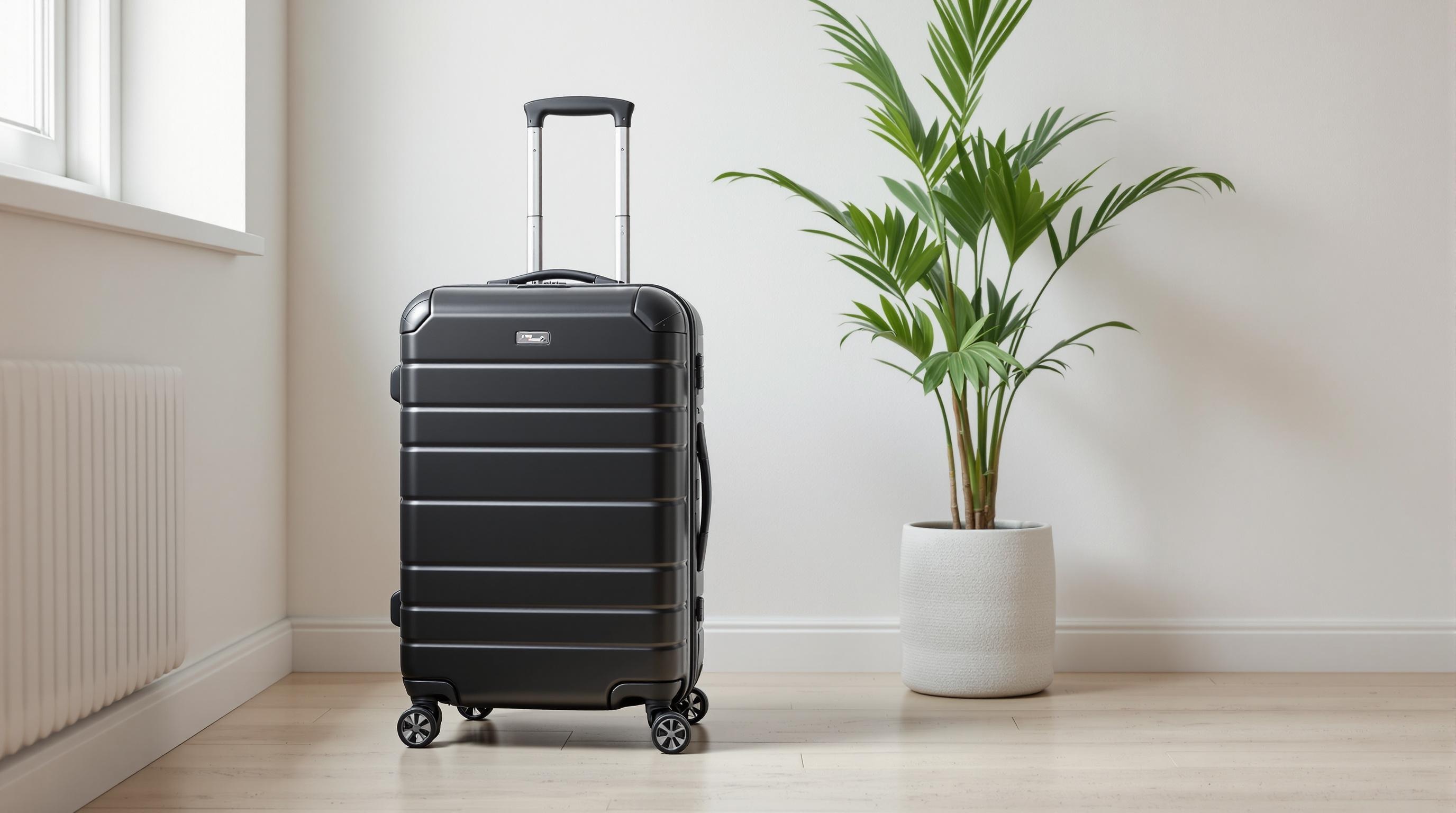
Standard dimensions and airline variations
When it comes to cabin baggage, there’s no such thing as a universal size. Each airline defines its own maximum cabin baggage dimensions. These variations may seem small, but they can make all the difference between worry-free boarding and unexpected extra charges.
Standard dimensions
IATA (the International Air Transport Association) defines the maximum dimensions allowed for cabin baggage: 55 x 45 x 25 cm, including handles and wheels. But be careful, and opt for slightly smaller luggage.
To travel with peace of mind on most airlines, we recommend a standard size of 55 x 40 x 20 cm. This is the most common reference size, and will help you avoid unpleasant surprises.
In practice, their volume generally varies between 27 and 40 liters – enough to carry the essentials for a short stay.
Airline variations
Authorized dimensions vary according to the airline you choose. Air France allows cabin baggage measuring 55 x 35 x 25 cm, with a weight limit of 12 kg in economy class. You can even add a small accessory measuring 40 x 30 x 15.
EasyJet is more flexible on dimensions, with a maximum size of 56 x 45 x 25, while Ryanair applies stricter rules: your main baggage item must not exceed 55 x 40 x 20 cm, with a maximum weight of 10 kg. Transavia follows similar standards to Air France in terms of size, but limits the weight to 10 kg.
A word of advice: before booking, always check the dimensions allowed on your airline’s website. Rules sometimes change, and it’s best to avoid unpleasant surprises when boarding. Once you know the exact dimensions authorized by your airline, you can choose a travel bag perfectly suited to your needs.
Tips for choosing the right bag
Choosing the right carry-on bag can make all the difference to your travels. Here are the key points to consider:
- Choose a lightweight bag. The lighter your bag when empty, the more you’ll be able to carry without exceeding the 10 kg limit.
- Choose durable materials such as ballistic nylon or reinforced polyester. These fabrics resist wear and tear while remaining lightweight.
- Check out the practicality: well-placed pockets for your documents and devices, sturdy zippers, and several carrying options (handles, shoulder strap) will make your travels more enjoyable.
- For a short trip, a 30-40-liter bag is more than sufficient. Upgrade to 40-50 liters for longer trips, while staying within the authorized dimensions.
Don’t forget that design, while important, must take second place to these practical criteria. A pretty bag that doesn’t fit into the dimensions will be more trouble than it’s worth.


